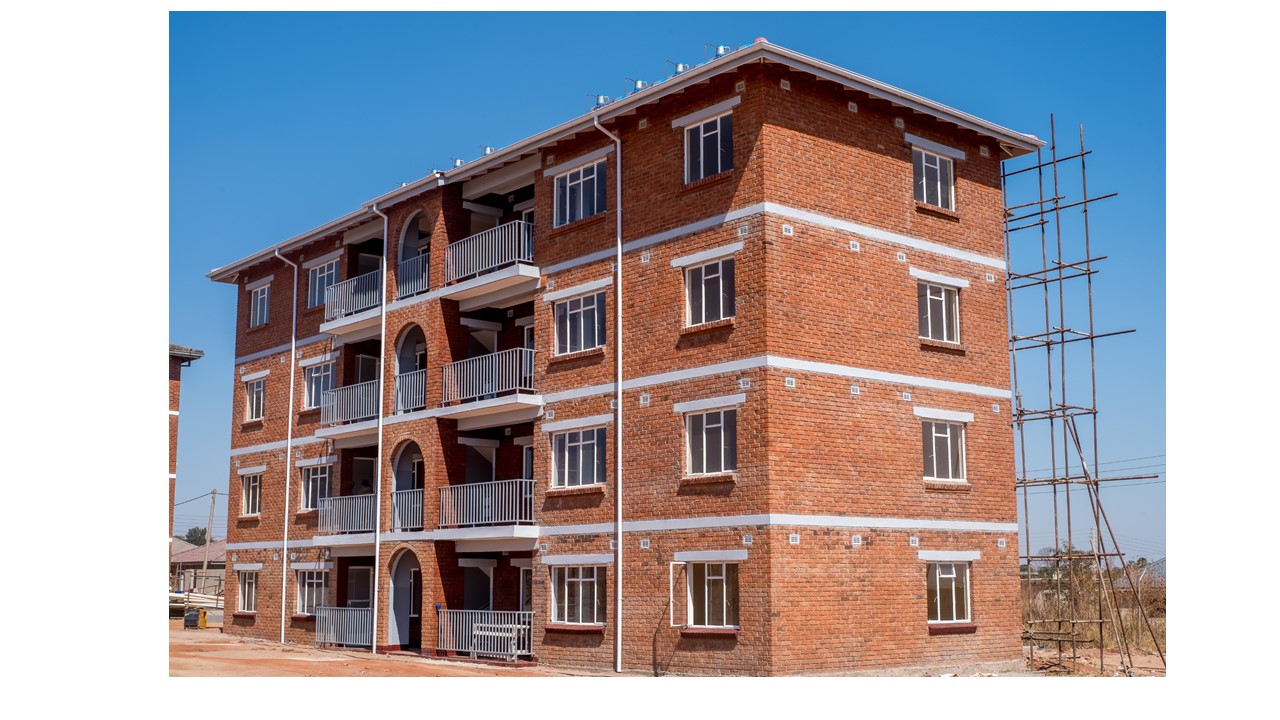
BULAWAYO – National Housing and Social Amenities Minister, Professor Paul Mavima has challenged the construction industry to take up a leading role in delivering one million housing units by 2030. He said the target “cannot be achieved by Government alone.”
Prof Mavima was speaking as Guest of Honour at the Construction Industry Federation of Zimbabwe (CIFOZ) Annual General Meeting and Congress at the Bulawayo Holiday Inn.
The Congress is being held under the theme “Creating a Resilient Construction Industry for National Development.”
He said the target, set under the second National Development Strategy (NDS2) to help Zimbabwe reach upper-middle-income status by 2030, requires collaboration among Government, the private sector, local authorities, financial institutions, developers, professionals, manufacturers and communities.
Drawing on the national philosophy of Nyika Inovakwa Nevene Vayo, the Minister described infrastructure as “the physical expression of national ambition.”
He said construction is an economic multiplier that stimulates demand for cement, steel, bricks, timber and transport, while creating jobs for artisans, electricians, plumbers and young people entering the sector.
Government’s role, he said, is to provide an enabling environment, improve regulatory efficiency, facilitate investment and develop partnership frameworks. In return, the industry must be ready to “innovate, collaborate and deliver.”
He urged local contractors to form joint ventures, consortia and strategic partnerships that combine finance, technical expertise, equipment and experience. The aim, he said, is to build Zimbabwean firms able to undertake major projects at home and compete regionally.
Prof Mavima warned against sacrificing quality for scale. “We cannot build the Zimbabwe of 2030 through shortcuts,” he said, adding that the sector must move from “a culture of construction at any cost to a culture of quality construction with lasting value.”
On ethics, he said professionalism rests on integrity and called on the industry to reject corruption, collusion, inflated costs, conflicts of interest, fraudulent certification and substandard materials.
The Minister also appealed to the industry to contribute to social housing, saying housing “is not merely a commodity” but a matter of human dignity and family stability. He said developers should provide decent, affordable homes for teachers, nurses, artisans, civil servants and young professionals alongside premium developments.
He urged the sector to embrace modular construction, alternative building methods, digital design and green technologies to cut costs and speed up delivery, and to bring young people in through training and apprenticeships.
Prof Mavima said Government is replacing the Model Building By-laws of 1977 with a modern, unified National Building Code. It is meant to deliver updated standards, better safety and resilience, and faster development approvals.
“You are building more than houses, you are building communities,” he told delegates, describing CIFOZ members as “partners in national transformation.”
The event, which brings together industry leaders, policymakers, financiers and innovators, continues with plenary sessions on infrastructure financing, policy frameworks, local contractor empowerment and smart construction.
The event was also attended by Local Government and Public Works Deputy Minister Hon. Kabikira, Transport and Infrastructural Development Deputy Minister Hon. Joshua Sacco and CIFOZ president, Mrs Elinah Shoko.